Why BRETS Scholarship Is the New Benchmark of Student Evaluation
For decades, Indian students were judged almost entirely by written rote memory. Discover why educators and parents across India now use the 60-minute BRETS & ANOQR Scholarship Exam — combining English & AI Read-Aloud (30 mins), General Knowledge (15 mins), and Life Skills (15 mins) — as the modern benchmark of student readiness.

What this covers
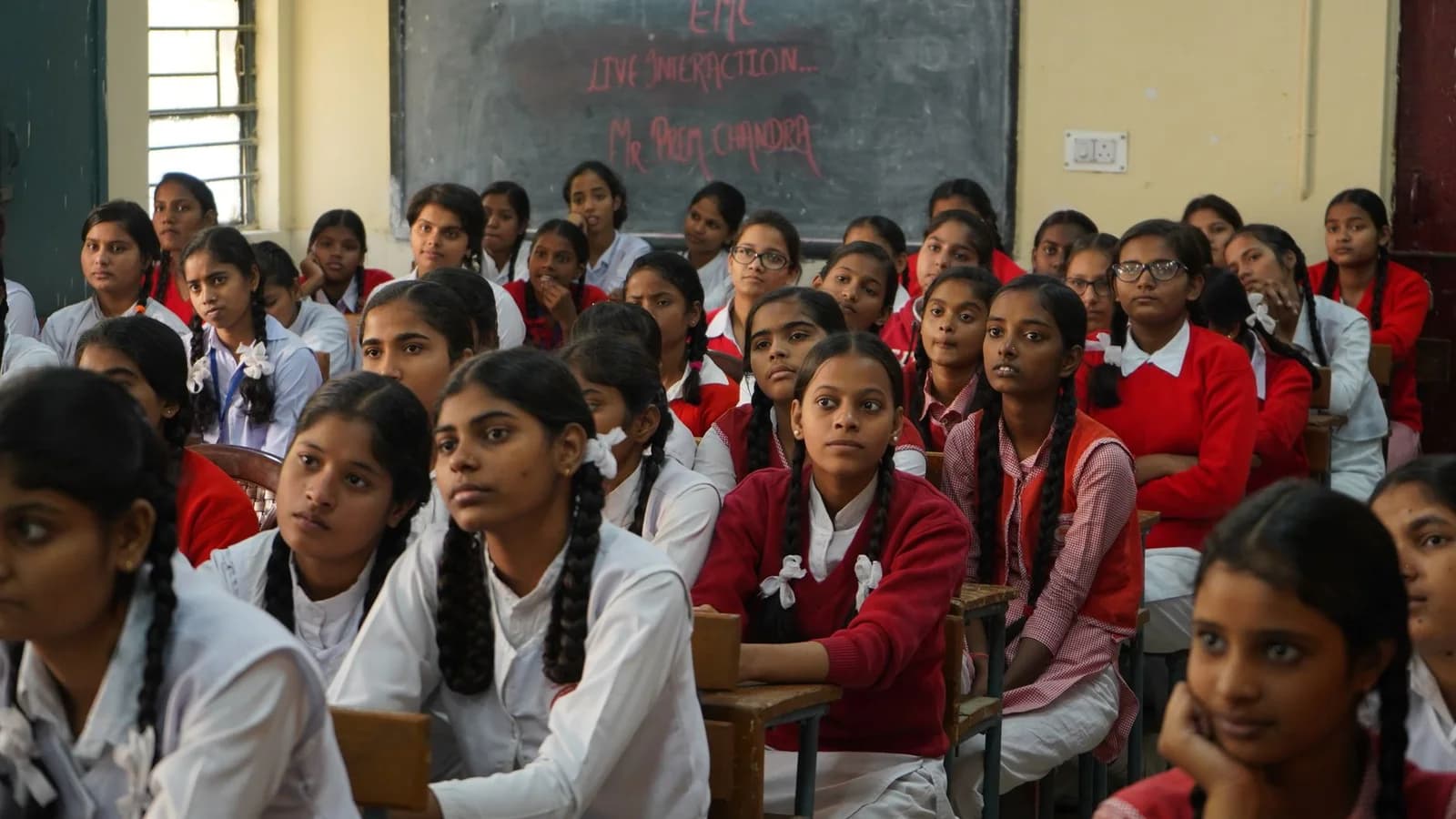
Every March and April, millions of parents across India look at a school report card filled with 90%+ marks and A1 grades — yet notice three unsettling realities when their child steps outside the classroom:
- The Spoken Fluency Gap: A student who scores 96/100 in written English grammar often freezes, mispronounces everyday words, or speaks in a hesitant monotone when asked to introduce themselves or read a paragraph aloud.
- The Real-World Awareness Gap: Students memorise textbook definitions for terminal exams and forget them within 48 hours, leaving gaps in civic awareness, everyday science, geography, and curiosity.
- The Life Skills Gap: Traditional exams rarely evaluate how a child handles digital safety, honesty, empathy, or practical decision-making.
Why does this happen? Because both school exams and private MCQ Olympiads test written recall, not applied capability.
The [ANOQR Scholarship Exam](/scholarship) — conducted by ANOQR in association with Brets Pvt Ltd (BRETS English Academy, Edapally, Kochi) — was designed to establish a new national benchmark for student evaluation in India for Classes 1 to 12.
How the 60-Minute BRETS & ANOQR Benchmark Is Structured — And Why
Unlike conventional tests where 100% of marks come from ticking OMR bubbles, the 60-minute BRETS & ANOQR rubric evaluates three complementary dimensions of a child's readiness:
| Evaluation Pillar | Duration | Format | Why It Matters as a Benchmark |
|---|---|---|---|
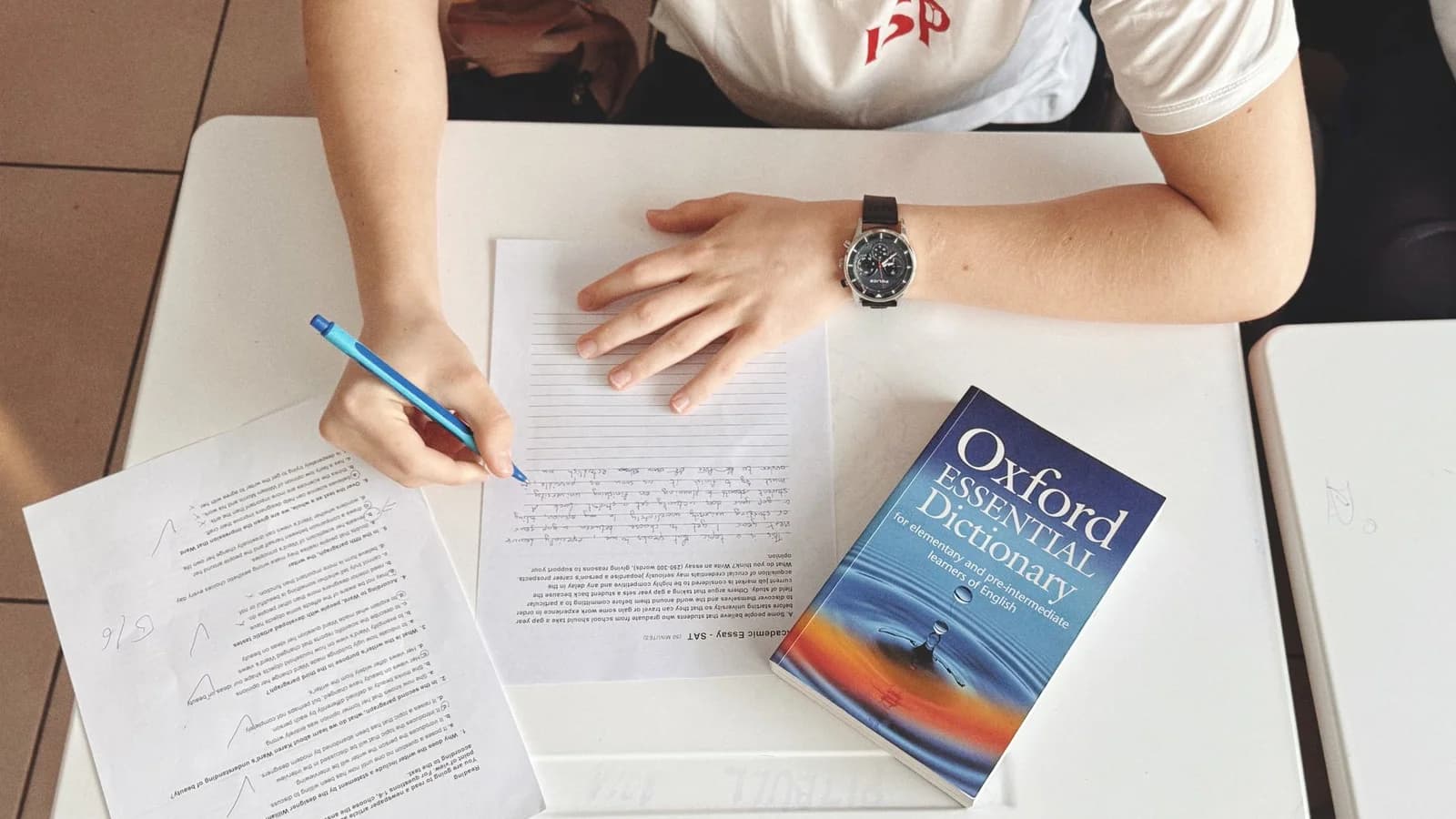
| English Language, Writing & AI Read-Aloud | 30 Minutes | Vocabulary, listening audio, unseen reading inference, original paragraph writing, and spoken Read-Aloud via microphone | Measures real comprehension, original expression, and intelligible spoken pronunciation using rubric-aligned AI without regional accent bias. |
| General Knowledge & Awareness | 15 Minutes | Multiple-choice questions | Evaluates breadth of curiosity across everyday science, India and the world, geography, history, environment, and sport beyond a single textbook. |
| Life Skills & Character | 15 Minutes | Scenario-based choices | Tests honesty, empathy, digital and physical safety, and responsible everyday decision-making. |
To qualify for the merit ranking in their class, a student must achieve at least 60% overall and 90% in each individual section — making it impossible to top the leaderboard through one-dimensional rote memorisation alone.
Side-by-Side Comparison: School Exams vs. Private Olympiads vs. BRETS & ANOQR Benchmark
| Feature | School Term Exams | Traditional MCQ Olympiads | BRETS & ANOQR Scholarship Benchmark |
|---|---|---|---|
| Syllabus Bias | Tied to one school/board textbook | Often favours coaching patterns | 100% Syllabus-Neutral across all Indian boards |
| Spoken & Written English | Written syllabus answers only | Written grammar MCQs only | AI Read-Aloud speech test + listening + original writing |
| Life Skills & Character | Not tested | Not tested | Dedicated 15-Minute Scenario Section |
| Accessibility | Offline in school | Often requires Sunday centre travel | 100% Online from Home (PAN-India coverage) |
| Guaranteed Learning Support | None | None for 99% of test-takers | ₹25,000 Worth of Free LangVR Courses for Every Participant |
| Merit Scholarship Payout | None | Medals / small vouchers for most ranks | ₹3,000/month × 12 months (₹36,000/year) + ₹1,00,000 courses |
| Registration Fee | Included in tuition | ₹250 – ₹1,200 per subject | ₹199 registration |
Evaluation + Remediation: Why a Benchmark Must Include Learning Tools
A true educational benchmark should never end with a score that labels a child and walks away. That is why the BRETS & ANOQR model pairs diagnosis with immediate skill-building:
- Step 1 — Diagnose (60 Minutes): Your child completes the test and receives an evaluation across GK, Life Skills, and Spoken/Written English. Read our Parent's Guide to Analysing Kids' English & GK.
- Step 2 — Upgrade (₹25,000 Free Course Bundle): Immediately after submission, every participant unlocks self-paced LangVR English and communication courses worth ₹25,000. Read the Complete ₹25,000 Free Course Breakdown.
- Step 3 — Reward Merit (₹36,000/Year Scholarship): Top qualifiers on each standard's merit list receive ₹3,000/month for 12 months directly into their verified bank account, ₹1,00,000 worth of winner courses, a memento, and a QR-verifiable certificate.
Explore By Class & School Board
- By Class: Class 1 · Class 2 · Class 3 · Class 4 · Class 5 · Class 6 · Class 7 · Class 8 · Class 9 · Class 10 · Class 11 · Class 12
- By School Board: CBSE · Kerala State Board · ICSE & ISC · Maharashtra Board · Tamil Nadu Board · Karnataka Board · IB & Cambridge · NIOS
Frequently asked questions
- Why does the BRETS & ANOQR Scholarship Exam allocate 30 minutes to English including an AI Read-Aloud test?
- Written school exams already measure textbook recall, but almost never measure listening comprehension, original writing, or spoken clarity. Dedicating 30 minutes to comprehensive English ensures spoken pronunciation and real communication are treated as core national skills alongside General Knowledge (15 mins) and Life Skills (15 mins).
- How is the AI Read-Aloud evaluation fairer than a human viva examiner?
- Human viva examiners vary widely in strictness, mood, and regional accent bias. The AI Read-Aloud engine applies the exact same acoustic rubric for clarity, word completeness, and intelligible pronunciation to every student across India.
- Can parents use this exam to track their child’s progress from Class 1 to Class 12?
- Yes. Because every class from Standard 1 to Standard 12 has its own separate merit list and age-calibrated band (Classes 1–2, 3–5, 6–8, and 9–12), families use it as an ongoing benchmark of their child’s spoken communication, general awareness, and character.